Nutrikonverter Guide
Thai FDA Nutrition Label Rules, Explained (Notification 445)
Last checked against the Ministry of Public Health's official notice: September 2026
If you're new to selling food in Thailand, or bringing a product into the Thai market for the first time, you've probably run into the term "nutrition label" or "GDA label" and wondered what it means and whether you need one. This guide starts from the basics: what these labels are, when the law requires one, and what has to be on it, based on the current rule, Ministry of Public Health Notification No. 445 B.E. 2566 (2023).
1. What is a "nutrition label"?
In Thailand, a nutrition label (ฉลากโภชนาการ) is the panel on a food package that shows how much energy and which nutrients are in one serving, such as calories, sugar, fat, and sodium. It's regulated by Thailand's FDA, usually called "อย." (short for สำนักงานคณะกรรมการอาหารและยา, the Food and Drug Administration).
You may also come across the "GDA label," a simplified front-of-pack version showing just energy, sugar, fat, and sodium, usually as small icons or a compact box rather than the full nutrient table. Its full official name is "ฉลากโภชนาการ และค่าพลังงาน น้ำตาล ไขมัน และโซเดียม แบบจีดีเอ" (nutrition label and GDA-format energy, sugar, fat, and sodium values), but most people call it a GDA label.
What these labels look like
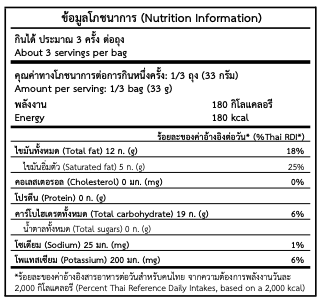
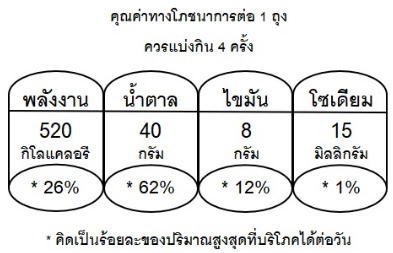
2. Does your product need one?
This is usually the first question. Under Notification 445, a nutrition label is mandatory if your product does any of the following:
- •Makes a nutrition claim on the package, with wording like "high protein," "low sugar," or "no added sugar."
- •Makes a health claim, meaning wording that connects the product to a health benefit (the regulation's own term is การกล่าวอ้างทางสุขภาพของอาหารบนฉลาก).
- •Falls into a food category the Ministry has designated as requiring a GDA label. This covers most snacks, confectionery, bakery items, and beverages.
If none of those apply, a nutrition label is currently optional. Many small producers add one anyway, since buyers, retailers, and export partners increasingly expect one.
3. What has to be on the label
The current format is simpler than the older one. Where the previous rules let producers choose between a longer and a shorter version, Notification 445 sets a single standard layout. At minimum, it must show these nutrients per serving:
- •พลังงาน (Energy, kcal)
- •คาร์โบไฮเดรต (Carbohydrates)
- •น้ำตาล (Sugar)
- •ไขมัน (Fat)
- •ไขมันอิ่มตัว (Saturated fat)
- •ไขมันทรานส์ (Trans fat)
- •โปรตีน (Protein)
- •โซเดียม (Sodium)
- •โพแทสเซียม (Potassium)
Vitamins and minerals are added to the label only when your product contains a meaningful amount or when you're making a claim about them. They aren't required across the board. Each nutrient must also show the percentage it covers of a daily reference amount, which the label calls "ร้อยละของค่าอ้างอิงต่อวัน," based on the Thai reference daily intake figures for a 2,000 kcal diet. Those reference figures were updated alongside this notification, so if you're working from an older label template, its percentages may be outdated even if the nutrient values are still correct.
4. "Serving size": the part that trips people up
Every nutrition label is expressed "per serving," not per whole package. The regulation's term for this is หนึ่งหน่วยบริโภค (one consumption unit). Notification 445 expanded the reference serving-size categories from 7 to 14 so they better match how Thai consumers eat. There are now separate reference categories for things like beverages, snack foods, dairy, bakery items, and ready-to-eat meals, each with its own standard reference amount.
In practice, your serving size should reflect a realistic single portion for your product category, not a default of 100 g. If you're not sure which of the 14 categories your product falls under, confirm that before you finalize a label, since it changes the numbers on every line.
5. Timing: what's in force now
- •The current rules (Notification 445) took effect July 2, 2024.
- •There's a transition period: products already labeled under the previous format (Notification 182) can keep selling existing stock through a transition deadline in mid-2027.
- •If you're designing a new label from now on (the situation most first-time and new-market producers are in), build it to the current Notification 445 format. There's no reason to use the old rules.
6. A simple starting checklist
If you're designing your first label or bringing a product into Thailand for the first time, work through it in this order:
- •Check whether your product needs a mandatory label (because of a claim, or its GDA category) or whether you're adding one voluntarily.
- •Use the current 9-nutrient format above, not the older 15-item or abbreviated versions found in old templates online.
- •Confirm which of the 14 reference serving-size categories fits your product, and size your serving accordingly.
- •Use the updated %daily reference values, not figures copied from before 2024.
- •Have your product's actual nutrient values confirmed, either from your own recipe calculation or, for anything going to registration, from lab analysis. The regulation governs how you present the numbers on the label, not where the numbers come from.
Already have your nutrient values?
Enter them once in Nutrikonverter and get a print-ready label in the current Notification 445 format, in Thai, English, or both.
Calculate my label →Don't have lab-tested values yet? See our lab analysis coordination service →